


FAQ
1
Do your terminals meet international safety standards?
Yes. Xishida designs and tests its self-service kiosks according to relevant international safety, electromagnetic compatibility and environmental protection requirements, with certifications and standards varying by product model and application.
Depending on the configuration, products can support certifications including CE, FCC, RoHS, UL, 3C and ISO 9001, while selected models undergo ESD, EMC, impact and environmental protection testing. For outdoor applications, certain kiosk configurations can achieve IP55/IP65 protection and IK08–IK10 impact resistance, helping protect equipment against water, dust and physical impact.
For payment-oriented terminals, Xishida can integrate secure payment hardware and encrypted PIN-entry components designed to support applicable financial security requirements, including PCI-DSS/EMVCo-related standards.
Because requirements differ between markets and applications, Xishida can recommend the appropriate certification and protection configuration according to the intended deployment environment.
Contact Xishida to confirm the applicable compliance requirements for your target market and kiosk application.

2
What happens if a kiosk arrives defective or develops a problem after delivery?
Xishida takes a full-process approach to quality control to minimize the risk of defective products reaching customers. Before shipment, kiosks undergo incoming-material, in-process and final inspection, followed by a 24–72-hour high-load aging test to identify potential hardware or peripheral issues before delivery.
If a quality issue is identified after delivery, Xishida’s after-sales team will review the case according to the RMA process and commercial agreement. Depending on the specific situation, the company can coordinate troubleshooting, repair or replacement to help restore the affected equipment.
For customized projects, Xishida also maintains technical documentation and hardware configuration information to support more efficient communication between the customer, engineering team and after-sales service.
This approach provides customers with support beyond the initial shipment and helps maintain reliable kiosk operation throughout deployment.

3
Do you provide technical support?
Yes. Xishida provides technical support throughout the hardware integration and deployment process, helping customers connect kiosk hardware with their own software and third-party systems.
The company supports Windows, Android and Linux environments and provides low-level drivers, peripheral SDKs and SDK/API technical documentation for integrating components such as payment modules, printers, card readers, scanners and other peripherals. This allows software companies and system integrators to maintain their existing software architecture while connecting it with Xishida hardware.
For more complex projects, Xishida’s R&D and engineering teams can also support remote integration testing and technical coordination with third-party software providers, helping verify hardware compatibility before deployment.
From prototype integration to post-delivery support, Xishida provides a structured technical service to help customers move efficiently from development to commercial operation.

4
How long does it take to produce samples?
For customized kiosk projects, sample development generally takes around 45 days, although the actual timeline depends on the complexity of the enclosure, structural design, peripheral configuration and level of customization. Xishida confirms the specific schedule during the quotation and engineering stage.
Before a prototype is delivered, the engineering team can conduct dry assembly, structural verification and internal consistency checks to evaluate the fit and configuration of major components. This helps ensure that the prototype provides a reliable reference for subsequent production.
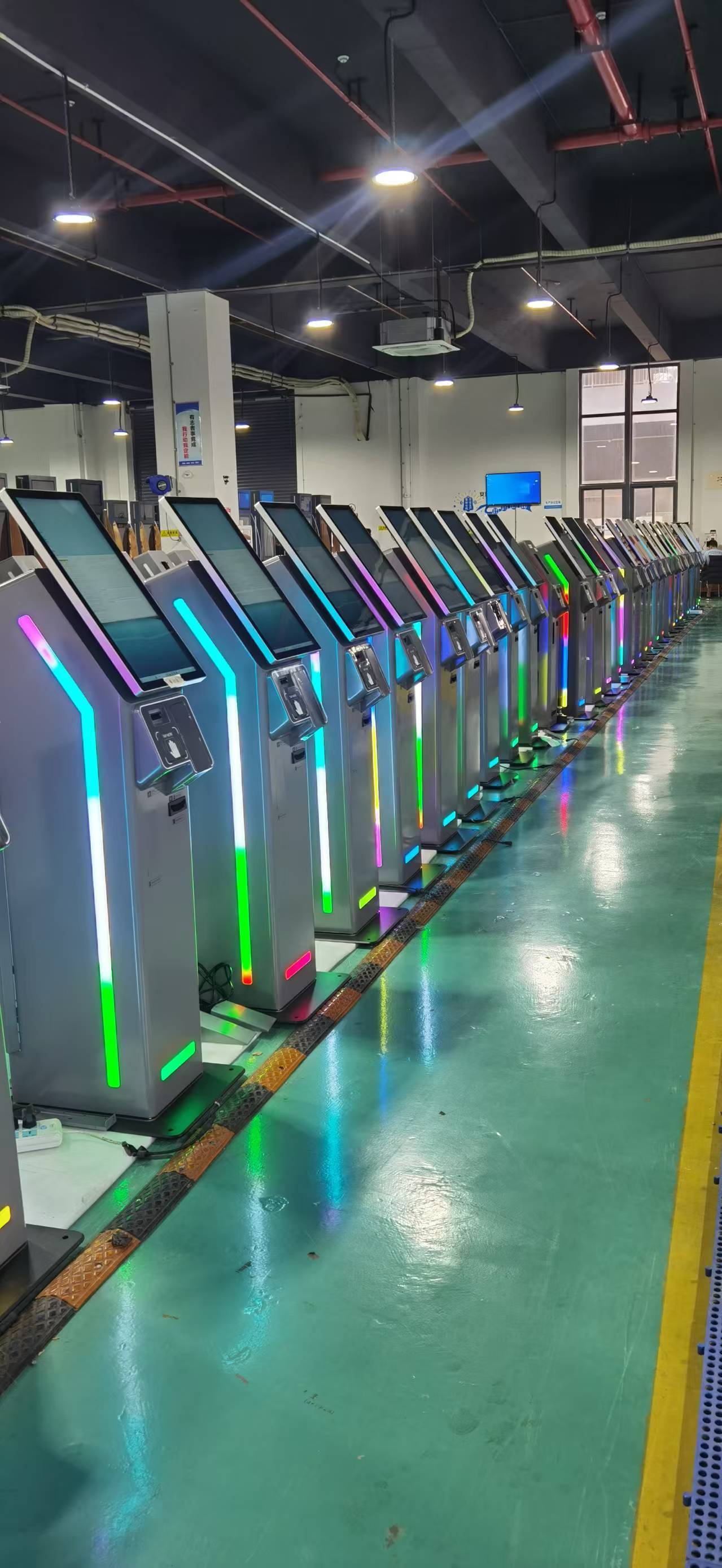
Once the design and prototype are approved, customers can proceed to mass production. The typical mass-production cycle is approximately 35 days, depending on order quantity and project complexity. Xishida’s 12,000 m² manufacturing facility and 10 assembly lines provide the production capacity needed to scale from initial prototype development to larger commercial orders.
Share your drawings, specifications or target quantity with Xishida to establish a project-specific timeline.

5
Can you provide test reports, certifications, and technical documentation?
Yes. Xishida can provide relevant certification documents, internal and third-party test reports, and technical documentation (including SGS and RoHS environmental compliance certificates) according to the product model and project requirements. These materials can help customers evaluate compliance, hardware reliability and integration requirements during supplier qualification and project approval.
For hardware integration projects, Xishida also provides SDK/API documentation to support communication between kiosk peripherals and the customer’s software or platform. This is particularly useful for software companies and system integrators developing their own self-service applications.
Quality documentation can also cover relevant material and component information, while Xishida maintains quality control across incoming materials, manufacturing and final inspection. By combining technical documentation with its engineering and manufacturing capabilities, Xishida helps customers move from hardware evaluation and prototype validation to production deployment with clearer technical references.

6
What is the expected service life of your self-service kiosks?
Xishida designs its kiosks for long-term, high-frequency operation, with reliability evaluated through both continuous aging tests and component-level fatigue testing. For financial-grade terminals, selected products can achieve an MTBF of up to 50,000 hours, providing a useful reference for applications requiring continuous operation.
Before shipment, each machine undergoes a 24–72-hour continuous high-load aging test, during which multiple functions and peripherals can operate simultaneously. High-wear components such as card readers, printers and touchscreens are also subjected to extensive cycle testing to identify potential failures before delivery.
Rather than defining a single service life for every kiosk, Xishida evaluates durability according to the model, components, operating environment and usage frequency. This approach allows hardware configurations to be matched with specific deployment requirements.
Share your expected operating hours and usage conditions with Xishida for a suitable configuration.

7
What quality control measures do you have in place?
Xishida operates an ISO 9001-certified quality management system with quality control throughout the manufacturing process, covering incoming materials, in-process production and final inspection before shipment.
Beyond routine inspection, Xishida conducts comprehensive reliability testing to evaluate kiosks under demanding operating conditions. Key tests include 24–72-hour high-load aging tests, peripheral fatigue testing, touchscreen cycle testing, card-reader insertion/removal testing, temperature and humidity simulation, salt-spray and UV aging tests, as well as ESD and EMC testing.
For outdoor and high-use applications, selected models can also undergo IP55/IP65 protection and IK08–IK10 impact-resistance testing. These procedures help identify potential hardware, structural and peripheral issues before delivery, supporting stable operation in healthcare, finance, government, transportation, hospitality and retail environments.
Contact Xishida to discuss the quality and testing requirements of your kiosk project.

8
What is the minimum order quantity (MOQ)?
Xishida offers a flexible MOQ starting from 1 unit, making its OEM/ODM service suitable not only for large-scale deployments but also for product development, prototype evaluation and initial market testing.
For customers developing a new kiosk, starting with a single prototype can help validate the industrial design, component compatibility, software integration and overall user experience before moving into larger production volumes. Xishida’s engineering team can support the transition from prototype development to finalized production.
For larger projects, Xishida’s 12,000 m² manufacturing facility and 10 assembly lines provide the production infrastructure required for scalable delivery. With an annual production capacity of approximately 50,000–70,000 units, Xishida can support customers as their requirements grow from initial samples to commercial deployment.
Whether you need one prototype or a larger production order, share your project requirements with Xishida to discuss the appropriate development and production plan.
9
Can you customize self-service kiosks to meet our specific project requirements?
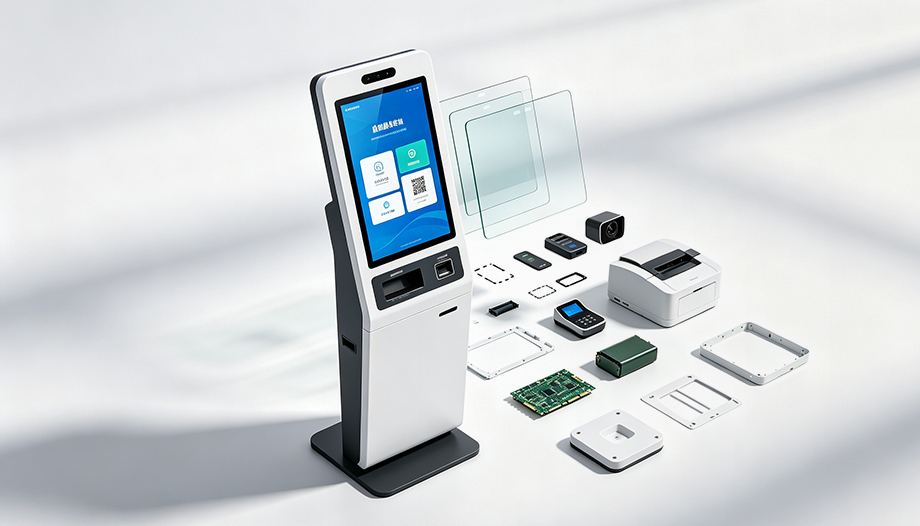
Yes. OEM/ODM customization is one of Xishida’s core capabilities, allowing customers to develop kiosk hardware around specific application, branding and functional requirements rather than being limited to standard models.
Customization can cover the enclosure structure, dimensions, brand colors, logo placement, coating, display configuration and internal layout. Xishida can also accommodate specified third-party components, such as POS terminals, encrypted keyboards, card readers, printers and other peripherals, with customized cut-outs, mounting brackets and interfaces where required.
From concept to production, Xishida’s engineering and industrial design teams can provide 2D CAD drawings and 3D structural designs to support design review and prototype development. Depending on the project, multiple peripherals can also be integrated into a single terminal.
The typical workflow covers requirements confirmation, engineering design, prototype production, testing and validation, and mass production, providing a structured path from initial concept to final delivery.
10
Can your kiosks support our preferred operating system, screen size, and peripherals?
Xishida supports Windows, Android and Linux, providing flexible hardware platforms for software companies, system integrators and self-service solution providers.
The kiosk hardware can be configured according to different deployment requirements, including:
- Different screen sizes and display formats
- Desktop, wall-mounted and floor-standing structures
- Touchscreen configurations
- Printers, scanners and card readers
- Cameras and biometric devices
- Payment and other application-specific peripherals
For customized projects, Xishida’s engineering team can develop 2D CAD drawings and 3D structural designs, allowing the enclosure, internal component layout and appearance to be adapted to the customer’s requirements.
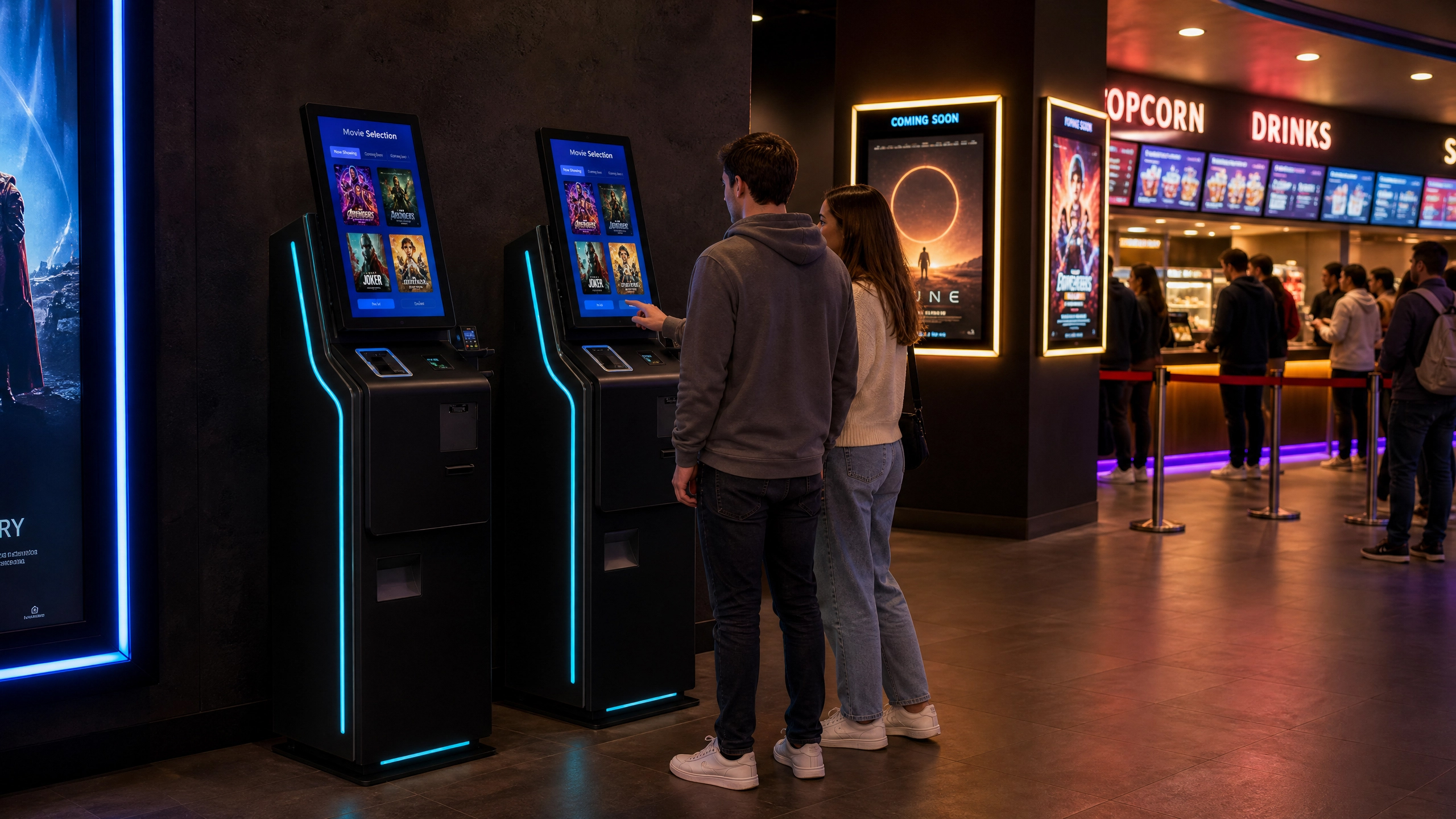
This flexibility enables the same hardware manufacturing capability to serve applications ranging from hospital registration and hotel check-in to government services, retail self-checkout and transportation.
11
Can your kiosks be used in outdoor and harsh environments?
Yes. Xishida provides outdoor and semi-outdoor kiosk configurations for applications such as parking, transportation, public services and outdoor commercial environments.
For demanding outdoor deployments, selected kiosk models can feature:
- IP55/IP65 waterproof and dustproof protection
- IK08–IK10 impact resistance
- High-brightness, anti-glare displays
- Outdoor-oriented enclosure and component configurations
- Temperature, salt-spray and sunlight simulation testing
These features are designed to improve protection against water, dust, physical impact, temperature changes and prolonged sunlight exposure.
For projects with specific environmental conditions, Xishida can further customize the kiosk enclosure, internal layout and hardware configuration according to the installation environment and operating requirements.
Planning an outdoor kiosk project? Share the location and environmental conditions with Xishida for a suitable configuration.

12
What payment options and modules can be integrated into your kiosks?
Xishida provides modular payment hardware for kiosks used in finance, retail, transportation, parking, hospitality and other transaction-based applications.
Depending on the project, available configurations can include:
- Magnetic-stripe, IC and NFC/contactless card readers
- EMV/POS payment terminals
- Banknote and coin acceptance modules
- Change dispensers and cash recycling systems
- Check scanners and other transaction-related peripherals
These payment components can be integrated with printers, scanners, cameras and identification devices inside a customized kiosk enclosure, creating a complete self-service transaction platform.
Xishida also provides SDK/API support for hardware integration, allowing software companies and system integrators to connect the kiosk with their own applications, payment middleware or existing systems while maintaining control over their software and IP.
Contact Xishida with your payment requirements to explore a suitable hardware configuration.

Xishida is a leading global manufacturer of self-service terminal hardware and a professional OEM/ODM service provider.
Tel: +86 183 1102 1134
E-mail: Kyrie.Eric@xsdgroup.cn